
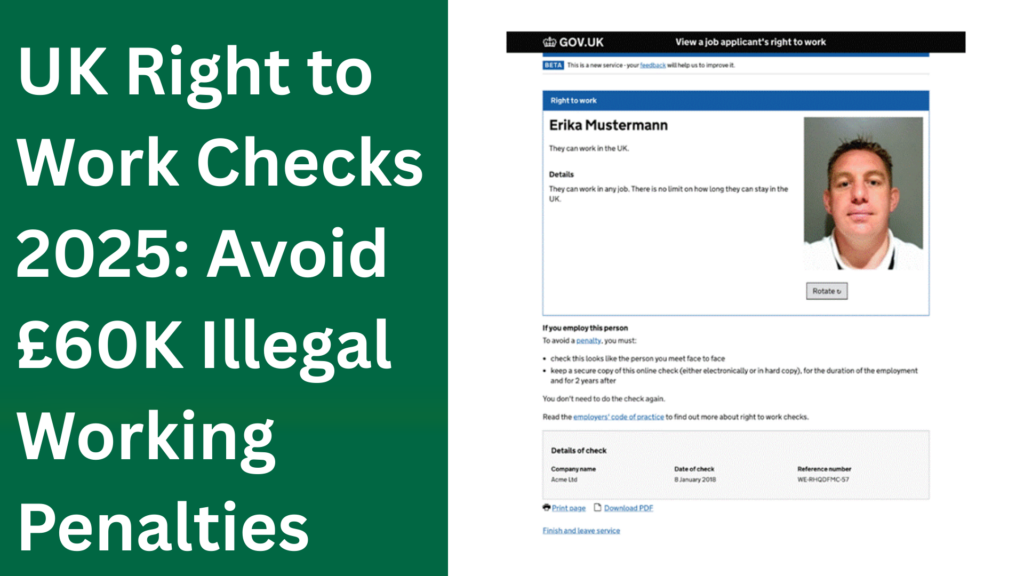
A recent case involving a UK local politician fined for employing an Indian student as a nanny without the legal right to work has once again highlighted one thing:
Right to Work compliance is non-negotiable.
While each case is different, the message for employers is the same:
You must verify every worker’s legal right to work—every time, without exceptions.
This blog breaks down what UK law requires, what went wrong in the case reported by The Economic Times, and what every employer must do to stay compliant.
🔗 Source Article:
UK politician fined for illegal employment – Economic Times
Right to Work Checks: What Every Employer Must Do
UK law requires employers to verify the immigration status of every worker before employment starts, regardless of:
- Full-time or part-time roles
- Zero-hours contracts
- Gig economy work
- Domestic roles (like nannies)
- Temporary or short-term work
From 2025 onward, these checks also apply to more gig-economy and flexible work roles, closing long-standing compliance gaps.
How Employers Must Conduct Right to Work Checks
To create a statutory excuse (legal protection), employers must:
✔️ Use one of the three approved methods:
- Manual document checks
For British & Irish citizens — check originals, confirm authenticity, and store secure copies. - Home Office online checks
For non-UK, non-Irish nationals using share codes. - Digital Identity Verification (IDVT)
Through certified Identity Service Providers (IDSPs) for UK & Irish citizens with valid passports.
✔️ Keep Records Properly
You must securely keep:
- Copies of documents
- Date the check was carried out
- Verification logs (e.g., IDVT reports, online check outcomes)
If records are missing—even if the worker had permission—you can still face a penalty.
Penalties for Illegal Working: What UK Employers Risk
The Home Office increased penalties in February 2024, and they are now extremely high.
Civil Penalties
- First breach:
💷 Starting at £45,000 per illegal worker - Repeat breach:
💷 Starting at £60,000 per illegal worker
These amounts can increase based on aggravating factors. Multiple violations can quickly exceed hundreds of thousands of pounds.
The Home Office may also:
- Publish the employer’s name online
- Share details with other regulatory bodies
- Conduct follow-up audits
Criminal Penalties
Employers can be prosecuted when they:
- Knowingly employ someone illegally OR
- Have reasonable cause to believe the person cannot work
Criminal consequences include:
- 🏛️ Unlimited fines
- ⛓️ Up to 5 years’ imprisonment
- 🚫 Director disqualification
- ❌ Forced business closure
Mitigating Factors That May Reduce Penalties
The Home Office may reduce penalties if employers:
Self-report
Fully cooperate with the investigation
Show strong right-to-work systems were in place
Completed partial checks
If all mitigation criteria are met, the Home Office may issue a warning notice instead of a monetary penalty.
Modern Slavery Obligations Also Apply
This case also highlights the need to ensure:
- Safe working conditions
- Fair pay
- Voluntary employment
- No exploitation
Employers must comply with the Modern Slavery Act 2015, especially if hiring domestic workers or vulnerable individuals.
Sponsor Licence Holders: Higher Compliance Standards
If your business holds a sponsor licence, your responsibilities are even greater:
- Track and report worker changes on time
- Keep accurate HR records
- Assign Certificates of Sponsorship only to genuine roles
- Monitor visa expiry dates
- Maintain proper salary levels
Failure to comply may trigger:
- B-rating downgrades
- Compliance audits
- Suspension
- Revocation
Practical Steps Employers Should Take Today
1. Strengthen HR compliance checks
Use standardised templates, checklists, and internal audits.
2. Train staff
Make sure all managers and HR teams know the rules.
3. Digitise your processes
Use automated reminders to track visa expiry dates.
4. Seek expert help
Immigration compliance can be complex—professional guidance can prevent costly mistakes.
Conclusion
This case is a vital reminder:
Right to Work compliance is your legal responsibility—no exceptions, no shortcuts.
With penalties now higher than ever, UK employers must invest in stronger systems, documented checks, and ongoing monitoring.
Doing things the right way protects:
- Your business
- Your team
- Your reputation
- And the individuals who rely on fair employment practices
Need Help Staying 100% Compliant?
If you’re a UK employer or sponsor licence holder, UKVICAS can help you:
- Conduct internal audits
- Improve HR systems
- Train staff on Right to Work checks
- Prepare for compliance visits
- Protect your licence