
Introduction: Why the UK Dependent Visa Income Rule Matters Now
A sudden refusal can disrupt both your employee’s life and your business operations. The UK dependent visa income rule has now increased to £29,000, and many employers still underestimate its impact.
In simple terms, applicants must prove a minimum income of £29,000 to bring their partner to the UK. However, many Skilled Worker employees wrongly assume their salary already meets this requirement.
As a result, applications fail—not due to eligibility, but due to poor documentation and lack of employer coordination.
Therefore, understanding the UK dependent visa income rule is no longer optional. It is critical for compliance, retention, and workforce stability.
What Is the UK Dependent Visa Income Rule in 2026?
The UK Home Office now requires applicants to meet a £29,000 annual income threshold to sponsor a spouse or partner.
Previously, the requirement was £18,600. However, the increase reflects stricter migration control policies.
Key points employers must understand:
- The £29,000 threshold applies to new applications
- Income must be clearly documented and verifiable
- The rule focuses on financial independence
- No automatic increase applies for children in standard partner routes
Importantly, the UK Visas and Immigration assesses documentation strictly. Even small inconsistencies can result in refusal.
Why the UK Dependent Visa Income Rule Is a Risk for Employers
Although this rule falls under family migration, its impact on employers is direct and immediate.
Employees depend on HR teams for:
- Salary confirmation letters
- Payslips and payroll records
- Employment verification
However, if these documents do not align perfectly, the application can fail.
So ask yourself:
- Are your HR documents 100% consistent with payroll data?
- Can your team produce evidence instantly if requested?
If not, your organisation is exposed to unnecessary risk.
Employer Risk Areas Under the £29,000 Rule
During application reviews, caseworkers focus on accuracy and consistency.
Common employer-related risks:
- Salary figures differ between payslips and letters
- Missing or outdated P60 records
- Incorrect employment start dates
- Delayed issuance of HR documents
As a result, even eligible applicants face refusals.
Therefore, employers must treat documentation as a compliance function, not an admin task.
UK Dependent Visa Income Rule: The 3 Approval Pillars
Every successful application depends on three structured components.
1. Financial Evidence: Meeting the £29,000 Threshold
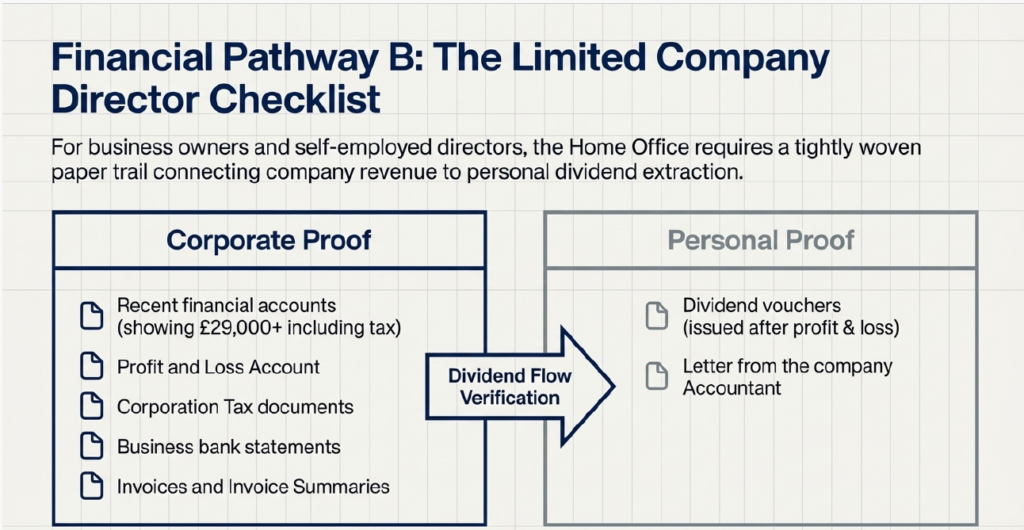
This is the most critical requirement.
For salaried employees:
- 6 months of payslips
- 6 months of matching bank statements
- Employer confirmation letter
- Latest P60
- Employment contract
If employment is less than 6 months, then 12 months of records are required.
Employer responsibility:
- Clearly state gross annual salary
- Confirm employment duration
- Ensure figures match across all documents
In addition, data must align with HM Revenue and Customs records.
2. Relationship Proof: Demonstrating Genuine Partnership
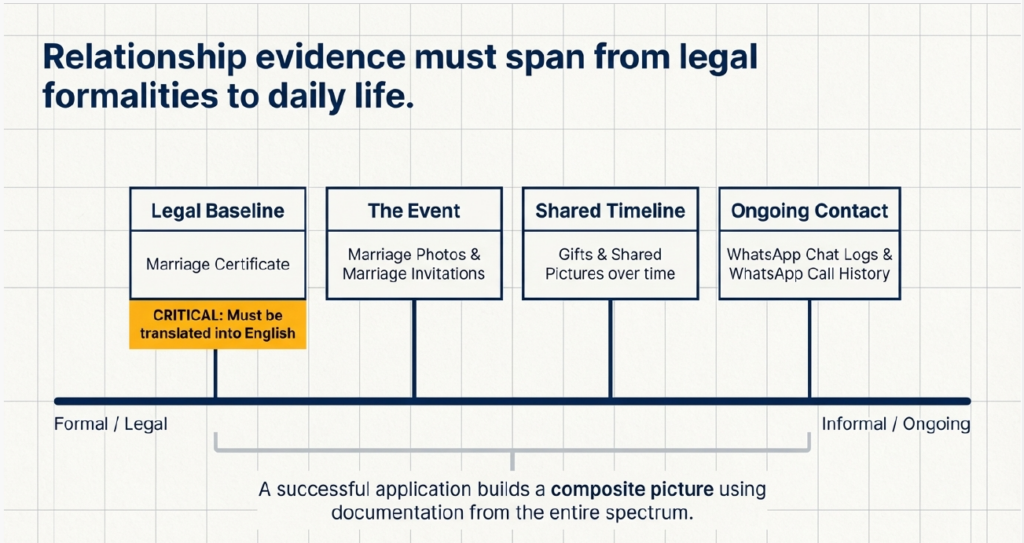
Financial eligibility alone is not enough.
Applicants must prove a genuine relationship through:
- Marriage or civil partnership certificate
- Joint bills or tenancy agreements
- Travel history and shared activities
- Communication records
Therefore, the application must show a consistent relationship timeline, not isolated evidence.
3. English and Suitability Requirements
Applicants must also meet basic eligibility standards:
- English test at A1 level (speaking and listening)
- Clean immigration history
- No serious criminal record
Although exemptions exist, they are limited. Therefore, early preparation is essential.
Common Mistakes That Lead to Refusals
Even when applicants meet the £29,000 threshold, errors still occur.
Most common issues:
- Mismatched salary figures
- Incomplete financial records
- Weak relationship evidence
- Missing English test proof
As a result, applications fail due to preventable mistakes—not eligibility.
The UK dependent visa income rule in 2026 requires applicants to show a minimum annual income of £29,000 to sponsor a spouse or partner. This applies to new applications and must be supported with verifiable documents such as payslips, bank statements, and employer confirmation. Any inconsistency in financial evidence can lead to a visa refusal, even if the income threshold is met.
Employer Checklist for the UK Dependent Visa Income Rule
To reduce risk, employers must implement a structured process.
Documentation Control
- Issue accurate salary letters
- Ensure payslips match P60 data
- Verify all figures before release
Early Identification
- Identify employees below £29,000
- Discuss alternative strategies early
Record Management
- Maintain digital employee records
- Ensure instant document access
Employee Guidance
- Advise on relationship evidence
- Encourage early English test booking
Importantly, consistency across all records is the key to approval.
Practical Employer Actions You Must Take Now
To stay ahead, take immediate action:
- Audit all employee salary records
- Standardise HR letter formats
- Cross-check payroll with documentation
- Train HR teams on visa requirements
- Review employee eligibility proactively
As a result, you reduce refusals and improve employee confidence.
How UKVICAS Helps You Stay Compliant
Managing this manually increases risk.
With UKVICAS, employers can:
- Store all employee records centrally
- Track salary compliance automatically
- Generate accurate documentation
- Stay audit-ready for Home Office checks
Therefore, instead of reacting to issues, you prevent them.
Final Thoughts: Compliance Is Now Proactive
The UK dependent visa income rule clearly signals a shift—financial proof is now stricter and more structured.
Employers who act early will:
- Reduce application refusals
- Improve employee retention
- Strengthen compliance systems
However, those who delay will face repeated errors and avoidable risks.
The question is simple:
Are your employee records aligned—or waiting to cause a refusal?