When you hold a sponsor licence, staying compliant is not optional. The Home Office closely monitors every sponsor, and even small gaps in your systems can lead to a downgrade, suspension, or revocation.
This guide explains the most common reasons sponsors face enforcement action—and the practical steps you can take to protect your licence.
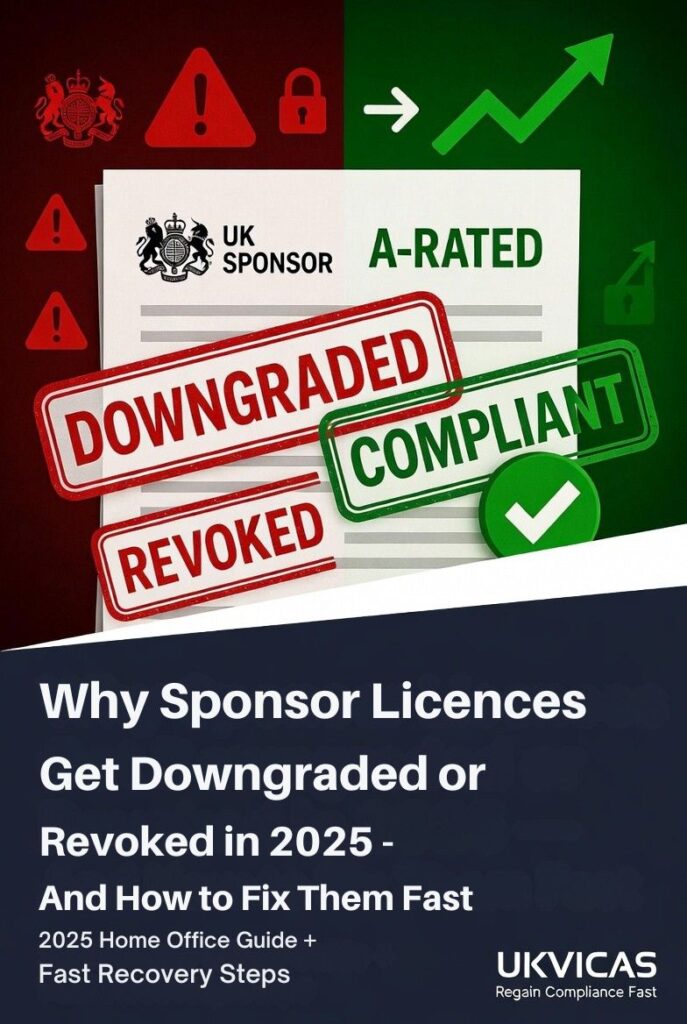
Why the Home Office Downgrades a Licence
The Home Office expects sponsors to maintain strong HR systems and follow strict reporting and record-keeping duties.
Two issues that frequently cause problems are:
- weak or inconsistent internal processes
- delays or inaccuracies in reporting changes through the Sponsorship Management System (SMS)
These gaps usually surface during compliance visits.
Common Reasons for a B-Rating (Downgrade)
A licence is often downgraded when the Home Office finds that your HR systems are not strong enough to meet your duties.
Typical triggers include:
- missing or incomplete right to work evidence
- unreported changes in job title, duties, salary, or work location
- inaccurate or outdated Certificate of Sponsorship (CoS) data
- poor monitoring of sponsored workers
- Level 1 or Level 2 users who are inactive or untrained
- outdated company or key-person details on the SMS
- missing documents required under Appendix D
When problems are identified, the Home Office may issue an action plan with steps and deadlines you must follow.
How to Fix a B-Rating
To regain an A-rating, sponsors must complete every step of the Home Office action plan.
GOV.UK guidance says a sponsor may be returned to an A-rating only if all actions are completed and nothing further needs improvement.
This usually involves:
- updating missing Appendix D records
- improving monitoring systems
- correcting past reporting delays
- training SMS users
- documenting internal processes clearly
If the action plan is not completed within the deadline, further action—including suspension—may follow.
When a Sponsor Licence Gets Suspended
The Home Office may suspend a licence when it needs to investigate possible breaches.
During this time:
- you may not be able to assign new CoS
- you may not appear on the public register temporarily
- the business may be asked for more evidence
After reviewing your response, the Home Office may:
- reinstate the licence
- reinstate it with a downgrade
- request further information
- proceed to revocation if the issues are serious
How to Respond to a Suspension
Sponsors normally get an opportunity to respond before the Home Office makes a final decision.
Your response should:
- Address every point raised in the suspension letter
- Provide complete evidence
- Fix gaps immediately
- Show improved processes and systems
- Agree to any action plan if required
A clear, well-documented response significantly improves the outcome.
Why Licences Are Revoked
Revocation is used when the Home Office decides the breaches are too serious for the sponsor to continue operating.
Typical reasons include:
- serious or deliberate breaches of immigration rules
- false information supplied to the Home Office
- behaviour “not conducive to the public good”
- repeated non-compliance despite warnings
When a licence is revoked, sponsored workers normally have their permission curtailed.
According to employee guidance, workers are usually given 60 days (or until visa expiry) to find a new sponsor or leave the UK.
After Revocation: What You Can Do
There is no quick fix after revocation, but sponsors can:
- review the reasons carefully
- fully correct the underlying issues
- rebuild HR systems and policies
- note that they may be prevented from applying for a new licence for a period, depending on the reasons for revocation
Some cases may require legal advice outside GOV.UK policy.
How to Protect Your Licence Going Forward
Preventing issues is easier than fixing them.
Simple steps help you stay compliant:
- run internal audits every quarter
- keep Appendix D records updated
- report all changes promptly via SMS
- remove inactive SMS users
- keep your organisational details up to date
- document all HR and compliance processes
Consistent internal checks protect your licence—and your workforce.
Want Help Staying Compliant?
If you want expert support to avoid downgrades or correct issues:
👉 Register on UKVICAS for a free compliance consultation
We help sponsor licence holders keep clean records, and stay fully compliant with Home Office rules.