
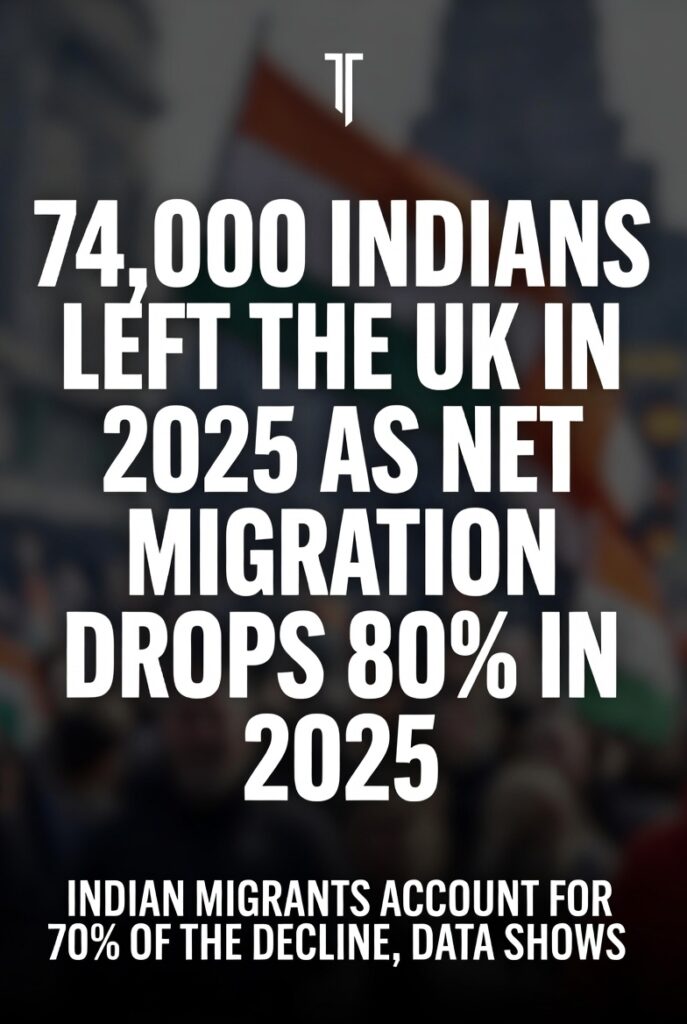
Net migration to the UK has fallen dramatically in the year to June 2025 — and Indians are at the centre of this shift. New data from the Office for National Statistics (ONS) shows that 74,000 Indian nationals left the UK, the highest among all non-EU nationalities.
This sharp fall has major implications for students, skilled workers, employers, and immigration policy watchers.
Here’s a simple breakdown of what’s happening — and what it means for you.
🔹 What the Numbers Really Show
The ONS data highlights a clear trend: more people are leaving the UK, especially those who originally arrived on study visas.
Key Indian departure figures:
- 45,000 students
- 22,000 work-visa holders
- 7,000 in other categories
➡️ Total: 74,000 Indian nationals
Chinese nationals were next with 42,000 departures.
According to the ONS:
“Indian was the most common non-EU nationality to emigrate from the UK.”
🔹 Why Is Net Migration Falling So Fast?
Net migration fell by 204,000 in the same period — a drop of nearly 80% from the 2023 peak.
ONS officials say the fall is driven by:
- Fewer people coming for work and study
- Fewer dependants arriving
- More people leaving after finishing studies
- Tougher immigration rules introduced in 2024–25
Home Secretary Shabana Mahmood said the figures reflected the government’s effort to reduce pressure on:
- Housing
- Health services
- Local communities
The government has already introduced major reforms, including:
- Higher salary thresholds
- Tighter Skilled Worker rules
- Removal of dependant rights for some visa categories
- Changes to settlement pathways
🔹 Skilled Worker Visa Numbers Hit Hard
Industry experts are worried.
The charity Work Rights Centre reports:
- Only 11,733 Skilled Worker visas were issued in Q3 2025
- Health & Care visas dropped from 45,071 (Q3 2023) → 2,628 (Q3 2025)
- Skilled Worker (general) visas dropped from 21,035 → 9,105
These declines are linked to:
- Higher salary thresholds
- Stricter eligibility checks
- Increased sponsorship costs
🔹 Sectors Facing Severe Shortages
The drop is hitting medium-skilled and essential sectors the hardest.
Construction
- UK needs 61,000 new workers EACH YEAR to meet housing targets
- Only 1,660 Skilled Worker visas were issued for construction roles in a full year
- Domestic hiring is nowhere close to filling the gap
Other shortage roles include:
- Logistics managers
- Data analysts
- Engineers and technicians
- Welders and construction trades
- Shipbuilders
- Visual artists
Even though these roles appear on the temporary shortage list, employers still struggle because:
- Sponsorship is expensive
- Most construction firms are micro-businesses
- Many rely on subcontractors, not employees
🔹 Are Migrant Workers at Higher Risk Now?
Yes — experts warn of rising risks.
The Work Rights Centre highlighted:
- Visa restrictions have increased worker vulnerability
- No dependant rights → less emotional and financial support
- Employer-tied visas increase risk of exploitation
- Lack of clarity in the new immigration rules adds uncertainty
The Migration Advisory Committee has previously warned that construction and similar sectors are especially high-risk for abuse under employer-controlled visas.
🔹 What Does This Mean for Indian Students and Workers?
This trend affects anyone planning to enter (or remain in) the UK through:
- Student visas
- Skilled Worker visas
- Graduate Route
- Health & Care visas
Students:
Many are completing their studies and leaving sooner due to:
- Fewer UK job opportunities
- Higher Skilled Worker salary thresholds
- Uncertainty around future settlement reforms
Workers:
Medium-skilled and shortage-list workers face:
- Limited routes
- Higher financial expectations
- Stricter employer scrutiny
Employers:
Recruitment challenges will intensify if:
- Salary thresholds rise again
- The Skilled Worker route remains restricted
- Domestic recruitment continues to fall short
🔹 The Bigger Picture: A System Under Pressure
The UK government argues that the reduced numbers are necessary to protect public services.
Rights groups argue that the UK is losing essential talent — especially in construction, engineering, logistics, and social care.
Both sides agree on one thing:
2025–2026 is a turning point for UK immigration policy.
📌 Need Help Understanding How These Changes Affect You?
Whether you’re:
- An employer struggling with recruitment
- A student planning to switch visas
- A worker exploring pathways
- A sponsor licence holder preparing for audits
Get a free consultation through UKVICAS.
🔗 External Source
Report by Business Standard:
https://www.business-standard.com/immigration/uk-immigration-2025-74-000-indians-leave-as-overall-numbers-fall-80-125112800248_1.html